The Mind-Body Connection: How Trauma Affects Your Physical Health
If you've ever felt your stomach drop before a difficult conversation, or noticed your shoulders tighten during stress, you've already experienced the mind-body connection firsthand. For trauma survivors, this connection runs far deeper — and its effects on physical health are real, measurable, and often misunderstood by conventional medicine.
What Does Trauma Actually Do to the Body?
Trauma is not just a memory or an emotional wound — it is a physiological event that reshapes how your body functions. When an experience overwhelms the nervous system's capacity to cope, the body encodes that threat response at a cellular level.
This applies to acute trauma (a single overwhelming event like an accident or assault), chronic trauma (repeated exposure to stress or danger over time), and complex trauma — the layered impact of prolonged interpersonal harm, often beginning in childhood. Research on Adverse Childhood Experiences (ACEs) has shown that early trauma dramatically increases the risk of physical health conditions decades later, including heart disease, autoimmune disorders, and chronic pain syndromes.
The body doesn't distinguish between a physical threat and an emotional one. It responds to both with the same biological alarm system — which is why trauma lives in the body long after the danger has passed.
The Nervous System's Role: Fight, Flight, Freeze, and Beyond
After trauma, the autonomic nervous system can get stuck in survival mode — cycling between hyperactivation and shutdown rather than returning to a regulated baseline.
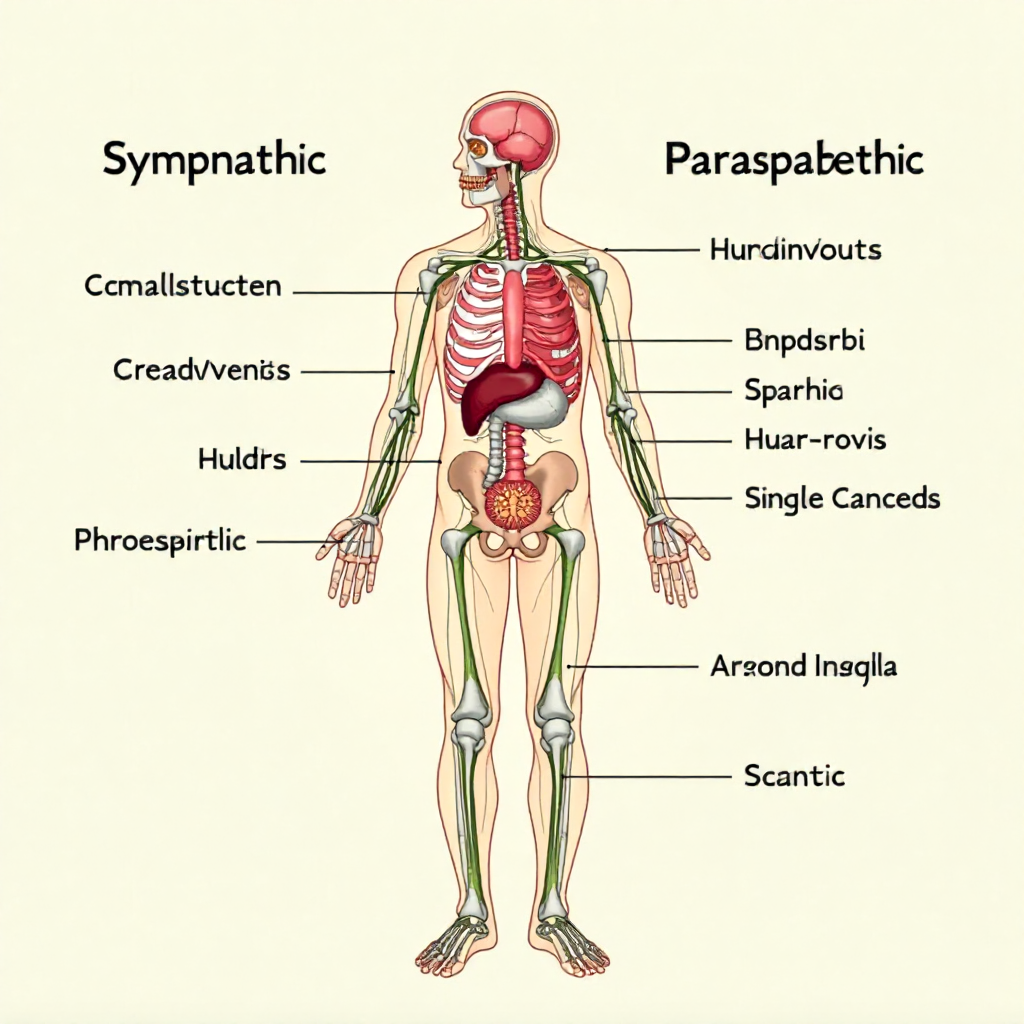
The autonomic nervous system has two primary branches: the sympathetic nervous system, which activates the fight-or-flight response, and the parasympathetic nervous system, which governs rest, digestion, and recovery. In a healthy stress response, these two systems balance each other. After trauma, that balance breaks down.
Psychiatrist Stephen Porges developed Polyvagal Theory to explain a third layer of this system: the vagus nerve, which connects the brain to nearly every major organ in the body. When the vagus nerve detects overwhelming threat, it can trigger a freeze or collapse response — the nervous system equivalent of playing dead. Survivors often describe this as emotional numbness, disconnection, or feeling "not quite present" in their own bodies.
Nervous system dysregulation — the state of being chronically stuck in threat-response patterns — is at the root of many trauma-related physical symptoms. The body is doing exactly what it evolved to do. It's responding normally to abnormal experiences.
Physical Symptoms That May Be Rooted in Trauma
Trauma frequently surfaces as physical complaints that have no clear medical explanation — or that persist despite standard treatment. These are called somatic symptoms, and they are the body's language for unprocessed experience.
Common physical presentations include:
- Chronic pain — particularly in the back, neck, and pelvis — often linked to persistent muscle tension and hypervigilance
- Fatigue and sleep disturbances — the nervous system struggles to downshift into restorative rest
- Digestive issues — irritable bowel syndrome, nausea, and gut dysregulation, since the gut and brain are in constant communication via the vagus nerve
- Autoimmune flares — conditions like fibromyalgia, lupus, and rheumatoid arthritis are disproportionately common among trauma survivors
- Headaches and migraines — frequently tied to nervous system overactivation and tension patterns
- Skin conditions — eczema and psoriasis that worsen during stress or emotional triggers
None of these symptoms mean something is "wrong" with you as a person. They mean your body has been carrying something heavy for a long time.
The Science of Stress Hormones and Chronic Inflammation
Prolonged trauma exposure keeps cortisol and other stress hormones chronically elevated, which directly drives systemic inflammation and long-term disease risk.
Under normal circumstances, cortisol is helpful — it sharpens focus, mobilizes energy, and then recedes once the threat passes. But when the nervous system remains in a dysregulated state, cortisol levels stay high. Over months and years, this creates a cascade of biological consequences.
Chronic inflammation is one of the most significant. Elevated stress hormones suppress immune regulation, leaving the body in a state of low-grade inflammatory activation. This inflammation has been linked to cardiovascular disease, metabolic disorders, depression, and accelerated cellular aging. A landmark study published in the American Journal of Preventive Medicine found that individuals with four or more ACEs had a 240% higher risk of hepatitis, a 390% higher risk of chronic obstructive pulmonary disease, and dramatically elevated rates of depression compared to those with no ACEs.
These aren't coincidences. They are the measurable biological footprint of unresolved trauma.
Why Standard Medical Care Sometimes Misses the Connection
Conventional medicine excels at treating symptoms but is often not trained to ask what happened to you — only what is wrong with you. This gap can leave trauma survivors cycling through specialists without lasting relief.
A patient presenting with chronic fatigue, gut problems, and recurring headaches may receive separate referrals to a gastroenterologist, a neurologist, and a rheumatologist. Each specialist treats their piece of the puzzle. But if no one asks about trauma history, the underlying driver goes unaddressed.
This isn't a failure of individual doctors — it reflects a system largely built around acute illness rather than the complex, whole-person picture that trauma-informed care requires. The good news is that this is changing. More medical schools are integrating trauma-informed frameworks, and primary care practices are beginning to screen for ACEs as part of routine health assessments.
If you've felt dismissed or told your symptoms are "just stress," your experience is valid. And you deserve care that looks at the whole picture.
Healing the Body Through Trauma-Informed Approaches
Recovery from trauma's physical effects is possible — and it often requires approaches that work directly with the body, not just the mind.
Somatic therapy (body-based therapy) is one of the most well-supported modalities for trauma healing. Practitioners like Peter Levine, developer of Somatic Experiencing, have shown that trauma can be discharged from the nervous system through guided body awareness and movement — much the way animals naturally shake off a threat response after danger passes.
Other evidence-informed approaches include:
- EMDR (Eye Movement Desensitization and Reprocessing) — a structured therapy that helps the brain reprocess traumatic memories while reducing their physiological charge
- Breathwork — slow, diaphragmatic breathing directly stimulates the vagus nerve and shifts the nervous system toward parasympathetic activation
- Trauma-sensitive yoga and movement — rebuilds the relationship between mind and body in a safe, choice-based environment
- Internal Family Systems (IFS) — a therapeutic approach that works with different "parts" of the self to reduce internal conflict and shame
No single method works for everyone, and healing is rarely linear. But the research is clear: the body can and does change in response to trauma-informed intervention.
Small Steps You Can Take Today
You don't need to overhaul your life to begin supporting your nervous system. Small, consistent practices can meaningfully shift your body's baseline over time.
Start here:
- Physiological sigh: A double inhale through the nose followed by a long exhale through the mouth. Stanford neuroscientist Andrew Huberman's research identifies this as the fastest way to reduce acute physiological stress.
- Grounding with the 5-4-3-2-1 technique: Name 5 things you see, 4 you can touch, 3 you hear, 2 you smell, 1 you taste. This anchors the nervous system in the present moment.
- Gentle movement: A 10-minute walk, slow stretching, or shaking your hands and arms can help discharge held tension from the body.
- Cold water on the face or wrists: Activates the dive reflex, which slows heart rate and engages the parasympathetic branch.
- Consistent sleep rhythms: The nervous system regulates most effectively when sleep and wake times are predictable.
These aren't cures. They are entry points — ways to build a relationship with your body that feels safe, one small moment at a time. Pair them with professional support when possible, and treat yourself with the patience you'd offer someone you love.
Frequently Asked Questions
Can trauma cause physical pain even years later?
Yes. The nervous system can remain in a dysregulated state long after the original trauma, sustaining muscle tension, inflammatory processes, and pain sensitivity for years or even decades. This is one reason chronic pain is so prevalent among trauma survivors — the body holds the history even when the mind has moved on.
What is the difference between somatic symptoms and psychosomatic symptoms?
Somatic symptoms are real physical sensations and conditions arising from nervous system and physiological processes — they are not imagined. The older term "psychosomatic" has historically implied that symptoms are "in your head," which is both inaccurate and stigmatizing. Modern trauma-informed medicine recognizes that mind and body are one integrated system, and physical symptoms with psychological roots are just as real as those with purely structural causes.
How do I know if my chronic illness is connected to past trauma?
There's no simple test, but some patterns are worth exploring with a professional: symptoms that began or worsened after a significant life event, physical complaints that don't respond to standard treatment, a history of ACEs, or a sense that your body is "always braced for something." A trauma-informed therapist or physician can help you explore these connections safely.
What is a trauma-informed doctor or therapist, and how do I find one?
A trauma-informed provider understands how trauma affects the body and behavior, avoids re-traumatizing practices, and centers patient safety and choice. To find one, look for therapists trained in EMDR, Somatic Experiencing, or IFS. The SAMHSA website offers resources on trauma-informed care, and Psychology Today's therapist directory allows filtering by trauma specialization.
Is it possible to fully heal the body after long-term trauma?
Many survivors experience profound and lasting recovery — not always the absence of all symptoms, but a genuine return to vitality, regulation, and quality of life. "Full healing" looks different for everyone. What the research consistently shows is that the nervous system retains neuroplasticity throughout life: it can learn new patterns, build new regulation capacities, and release old threat responses. Healing is real. It takes time, support, and often a combination of approaches — but it is possible.