10 Evidence-Based Techniques for Trauma Recovery: A Survivor's Guide to Healing
Healing from trauma is rarely a straight line. Some days feel like progress; others feel like starting over. What research consistently shows, though, is that recovery is genuinely possible — and that specific, well-studied techniques can meaningfully reduce suffering and support post-traumatic growth. This guide walks through ten of those techniques, explaining not just what they are but why they work.
What Does "Evidence-Based" Mean in Trauma Recovery?
An evidence-based technique is one that has been tested in controlled clinical studies and shown to produce measurable improvements in trauma-related symptoms. In the context of trauma recovery, this typically means reductions in PTSD symptoms, anxiety, emotional dysregulation, or avoidance behaviors — verified through peer-reviewed research, not anecdote.
Organizations like the American Psychological Association and the U.S. Department of Veterans Affairs maintain treatment guidelines that distinguish strongly supported approaches from those with limited or mixed evidence. The techniques on this list meet that threshold. That said, "evidence-based" does not mean "guaranteed" — individual responses vary, and what works well for one survivor may be less effective for another.
Understanding How Trauma Affects the Brain and Body
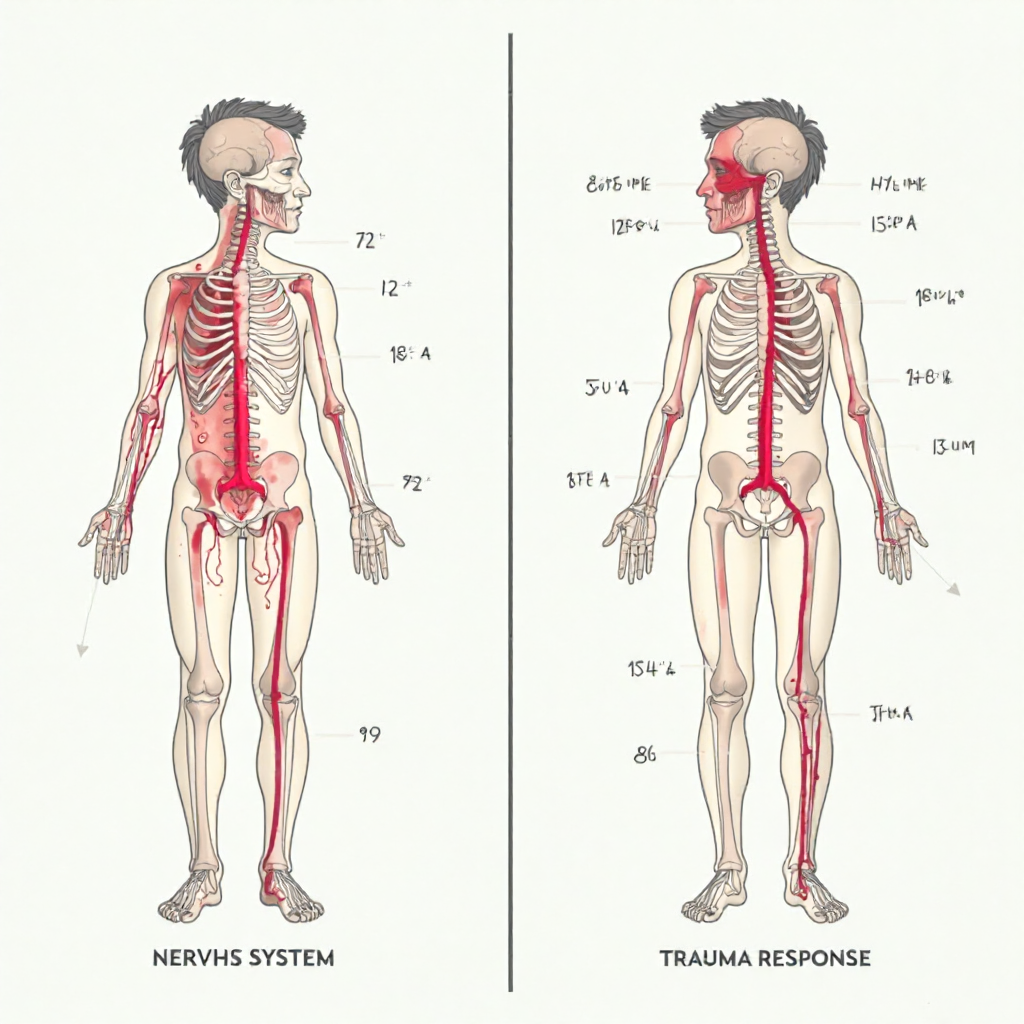
Trauma rewires the nervous system in ways that go far beyond memory. When a person experiences acute, complex, or developmental trauma, the brain's threat-detection system — particularly the amygdala — becomes sensitized. The body learns to stay on alert long after the danger has passed.
This is why trauma survivors often experience symptoms that feel physical: a racing heart, a tight chest, the urge to freeze or flee in situations that seem objectively safe. The concept of the window of tolerance describes the zone of nervous system activation where a person can process difficult experiences without becoming overwhelmed or shutting down entirely. Most trauma-focused therapies, whatever their method, aim to expand that window.
Understanding this mechanism matters because it explains why willpower alone rarely resolves trauma. The nervous system needs to be retrained, not just reasoned with.
Therapy-Based Techniques (Techniques 1–4)
Structured clinical therapies form the backbone of trauma treatment and carry the strongest evidence base. These approaches require a trained therapist, but they consistently produce significant, lasting results.
1. Cognitive Behavioral Therapy (CBT) for Trauma
Trauma-focused CBT works by identifying and restructuring distorted thought patterns that develop after traumatic experiences — beliefs like "I am permanently damaged" or "nowhere is safe." A therapist guides the survivor to examine the evidence for these beliefs and replace them with more accurate, adaptive ones. Research shows TF-CBT reduces PTSD symptoms in both adults and children, often within 12–16 sessions.
2. EMDR (Eye Movement Desensitization and Reprocessing)
EMDR uses bilateral sensory stimulation — typically guided eye movements — while the client briefly recalls traumatic memories. The mechanism is still debated among researchers, but the leading theory is that bilateral stimulation mimics the brain's natural memory-consolidation process during REM sleep, helping the nervous system reprocess "stuck" traumatic memories into ordinary autobiographical ones. EMDR is endorsed by the World Health Organization for PTSD treatment and often produces results faster than traditional talk therapy.
3. Prolonged Exposure Therapy
Prolonged Exposure (PE) is built on a straightforward principle: avoidance maintains fear. By gradually and systematically approaching trauma-related memories and situations in a safe therapeutic environment, survivors learn that these triggers are no longer dangerous. The anxiety response weakens through repeated, controlled exposure. PE has one of the strongest evidence bases for PTSD, though it requires a willingness to tolerate temporary discomfort — which is why working with a skilled, trauma-informed therapist is essential.
4. Trauma-Focused Talk Therapy
Not all trauma processing requires a specific protocol. Narrative-based talk therapy — where a survivor constructs a coherent story of their experience with a compassionate, trauma-informed clinician — supports emotional processing and meaning-making. This approach is particularly valuable for complex trauma (C-PTSD), where the trauma is relational and ongoing rather than a single incident.
Body-Based and Somatic Techniques (Techniques 5–7)
Somatic approaches work directly with the body, not just the mind. For survivors who feel "talked out" or find that cognitive approaches leave them emotionally flat, body-based healing can open entirely different pathways.
5. Somatic Therapy
Somatic therapy — including approaches like Somatic Experiencing developed by Peter Levine — focuses on physical sensations as the entry point for trauma processing. Rather than narrating the traumatic event, clients track bodily sensations and learn to discharge the stored survival energy that trauma leaves in the nervous system. It's particularly effective for survivors whose trauma is pre-verbal or who experience strong physical symptoms.
6. Breathwork and Nervous System Regulation
Controlled breathing directly influences the autonomic nervous system. Techniques like diaphragmatic breathing, box breathing (inhale 4 counts, hold 4, exhale 4, hold 4), and extended exhale breathing activate the parasympathetic nervous system — the body's "rest and digest" state — countering the hyperactivation that trauma produces. These techniques are accessible, free, and can be practiced independently, making them a powerful complement to formal therapy.
7. Grounding Exercises
Grounding techniques anchor a person in the present moment when trauma memories or dissociation pull them out of it. The 5-4-3-2-1 method — naming five things you can see, four you can touch, three you can hear, two you can smell, one you can taste — is simple but neurologically sound. It redirects attention to sensory input, which signals the nervous system that the present environment is safe.
Lifestyle and Self-Directed Techniques (Techniques 8–10)
These practices don't replace professional treatment, but they meaningfully support recovery between sessions and build long-term resilience.
8. Mindfulness Practice
Mindfulness — the practice of observing present-moment experience without judgment — has a robust evidence base for reducing PTSD symptoms, anxiety, and emotional reactivity. It works partly by strengthening the prefrontal cortex's capacity to regulate the amygdala. Even 10 minutes of daily mindfulness practice, sustained over 8 weeks, has been shown to produce measurable changes in stress response. Apps like Insight Timer or Headspace offer structured programs, though trauma survivors should know that some meditation practices can initially surface difficult feelings — starting slowly and gently is wise.
9. Journaling and Narrative Processing
Writing about traumatic experiences — particularly in a structured, meaning-focused way — supports emotional processing and helps survivors build a coherent narrative around what happened to them. James Pennebaker's decades of research on expressive writing show that even brief writing sessions (15–20 minutes, three to four days in a row) can reduce intrusive thoughts and improve psychological wellbeing. The key is writing about both the facts and the feelings, not just cataloguing events.
10. Community and Peer Support
Social connection is one of the most underrated elements of trauma recovery. Peer support groups — whether in-person or online — provide validation, reduce shame, and remind survivors they are not alone. Research on post-traumatic growth consistently identifies meaningful relationships as a core factor in long-term healing. This doesn't mean sharing your story publicly; even one trusted connection can shift the recovery trajectory significantly.
How to Choose the Right Technique for You
There is no universally "best" technique — the right approach depends on your trauma type, your current nervous system state, and your access to professional support.
- If your trauma is recent or acute: Grounding and breathwork can stabilize the nervous system before deeper processing begins.
- If you have a PTSD diagnosis: EMDR and Prolonged Exposure have the strongest evidence base and are worth discussing with a therapist.
- If you experienced complex or relational trauma: Somatic therapy and trauma-focused talk therapy tend to be better suited to the layered nature of C-PTSD.
- If professional therapy is not currently accessible: Mindfulness, journaling, breathwork, and peer support are meaningful starting points — not substitutes, but genuine contributors to recovery.
Trust your own response. If a technique consistently increases distress rather than reducing it, pause and consult a professional before continuing.
When to Seek Professional Support
Self-directed techniques have real value, but they have limits. If you are experiencing suicidal thoughts, severe dissociation, substance use as a coping mechanism, or symptoms that are worsening over time, please reach out to a trauma-informed therapist or crisis service.
Finding a therapist who practices trauma-informed care — meaning they understand how trauma affects behavior, cognition, and the body, and who prioritize safety and collaboration — makes a significant difference. The Psychology Today therapist directory allows you to filter by trauma specialization and insurance acceptance.
Reaching out is not a sign that you've failed at self-healing. It's a sign that you're taking your recovery seriously.
Frequently Asked Questions
Can trauma be fully healed, or is it a lifelong process?
Many survivors do reach a point where trauma no longer dominates their daily experience — where memories lose their charge and functioning returns to baseline or beyond. "Full healing" looks different for everyone, and some people carry traces of their experiences permanently. Post-traumatic growth research shows that a significant number of survivors report positive psychological change alongside — not instead of — their pain.
How long does trauma recovery typically take?
There is no standard timeline. Some people see meaningful improvement in PTSD symptoms after 12–16 sessions of CBT or EMDR. Others, particularly those with complex or developmental trauma, work through recovery over years. Progress is rarely linear, and setbacks are a normal part of the process, not evidence that healing isn't happening.
Is it possible to use these techniques without a therapist?
Several techniques — mindfulness, grounding, breathwork, journaling, and peer support — can be practiced independently and offer genuine benefit. Therapy-based approaches like EMDR and Prolonged Exposure require a trained professional to be done safely. If you're working alone, start with stabilization techniques before attempting any deep trauma processing.
What is the difference between PTSD and complex trauma (C-PTSD)?
PTSD typically follows a specific traumatic event or series of events. Complex PTSD (C-PTSD) develops from prolonged, repeated trauma — often in childhood or within relationships — and includes additional symptoms like difficulty regulating emotions, negative self-concept, and problems with relationships. C-PTSD often responds better to longer-term, relationship-focused therapy than to short-term exposure protocols.
Are these techniques safe for all types of trauma survivors?
Most of the techniques listed here are broadly safe, but individual responses vary. Meditation and breathwork can occasionally surface intense emotions in trauma survivors. Exposure-based therapies require careful pacing. Anyone with a history of severe dissociation, psychosis, or active substance dependence should work with a qualified clinician rather than attempting intensive trauma processing independently.